
Discovery and Qualification
How to Practice Discovery and Demos Between Live Deals
September 8, 2026 · 14 min read
TL;DR
Qualified SaaS deals stall when buyers fail to commit after recognizing pain. To close sales, focus on guiding the decision-making process by connecting buyer pain to business impact, mapping decision paths, and ensuring every opportunity has a buyer-owned next step.
Why is your strongest deal still open after the buyer agreed the problem matters? Agreement on pain never became agreement on how to decide. Your job is to make that complex decision easier. Pressure can't replace a decision path.
More leads won't fix that gap. The goal of sales isn't to pressure the buyer. Your job is to understand the problem, connect it to business impact, and guide a complex decision.
Learn more about Need help applying the framework to live deals or your team? Work directly with SalesMVP Lab..
Key Takeaways:
- Diagnose where the buyer stopped deciding.
- Use discovery across the full sales cycle.
- Connect pain to measurable business impact.
- Build urgency around real driving events.
- Map the decision before sending a proposal.
- Give every deal a buyer-owned next step.
Why Qualified SaaS Deals Still Stall
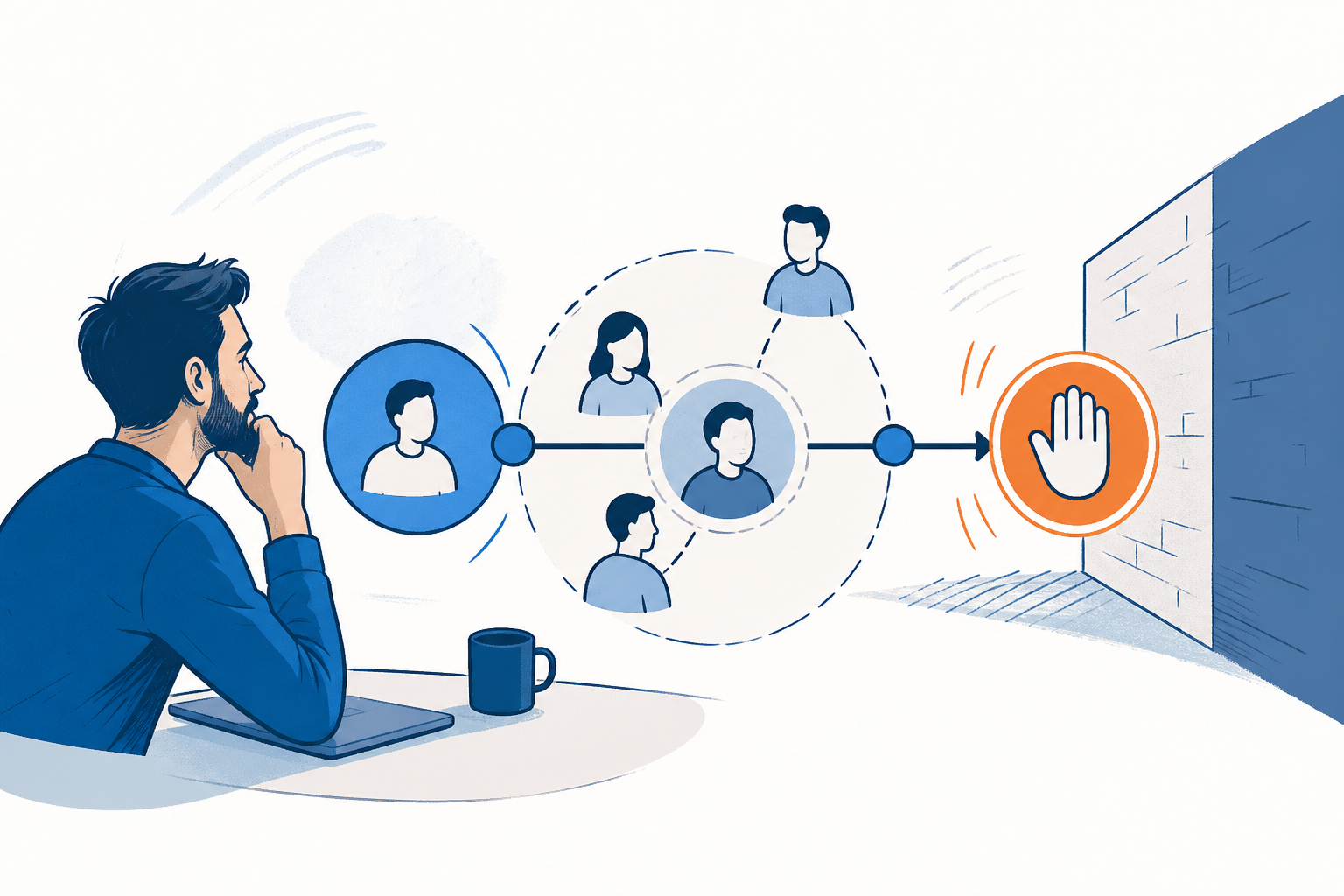
Qualified SaaS deals stall when buyer interest never becomes a clear decision process. The founder discovers enough pain to earn a demo, but not enough impact or urgency to support change. Activity continues. Buyer commitment doesn't.
Pipeline Volume Can Hide Weak Deal Control
A full pipeline feels like proof you're winning. You see demos booked, proposals sent, and follow-ups scheduled. Yet those activities tell you very little about whether the buyer is making progress toward a decision.
You open HubSpot at 8:15 on Monday and review four late-stage deals. Every opportunity has recent activity. One buyer requested security details, another asked for revised pricing, and two promised internal conversations. None has agreed to a decision date or named who signs off on the purchase. By Friday, three have gone quiet.
Your CRM stage works like a shipping label. It tells you where the package is supposed to be, not whether it actually moved an inch. The label reads "Contract Sent" while the box sits on a loading dock in the buyer's legal queue. Without buyer evidence, a late-stage label hides an early-stage decision.
More pipeline has merit when you lack enough qualified conversations. That's a real problem, and I won't pretend volume never matters. Once you have active opportunities, though, adding leads becomes a way to avoid looking at how the existing deals are actually being run.
The Demo Gets Blamed for Missing Discovery
Founders often go back to the demo when deals stall. They add slides, show more features, or spend longer explaining the product. I get the instinct. Product knowledge feels controllable, and rebuilding a slide is easier than making an awkward diagnostic call.
The missed step usually happened earlier. You didn't learn enough about the buyer's objective, the cost of the current problem, or who else cares about fixing it. With weak context, even a polished demo becomes a product tour with better lighting.
A feature only matters when it changes something the buyer values. Faster reporting might save hours, reduce a missed deadline, or give a leader better control. Without that connection, it's another capability the buyer has to translate alone, on their own time, with no help from you.
One B2B SaaS feedback company changed how it handled discovery and demos. The team mapped buyer pain more clearly, connected the demo to business impact, and tightened recap discipline after every call. MRR increased 37% over four months, though no single tactic should get all the credit.
Pressure Creates Motion Without Commitment
Pressure can produce a reply. It rarely produces a durable buying decision. Discounts, artificial deadlines, and repeated "just checking in" messages create motion, while the buyer still hasn't resolved the internal questions blocking action.
The better standard is buyer commitment. Did the prospect agree that the problem matters? Can they explain the impact internally without you in the room? Have they named the decision criteria, the people involved, and the next action?
Founders feel this gap personally. You replay the call at 11 p.m., rewrite the follow-up three times, and wonder whether to push harder or back off. Neither move fixes missing decision evidence.
Your sales cycle doesn't need more force. It needs better information and a clearer path. How do you build both without turning discovery into an interrogation?
How to Make the Buyer's Decision Easier
You make a complex buying decision easier by gathering buyer context throughout the sales cycle, then using it to shape each next step. Discovery informs the demo. Impact supports urgency. Decision details tell you how the deal can actually move.
Audit Where the Buyer Stopped Deciding
Start with the stalled opportunities already in your pipeline, not with a rewrite of every script. Find the last point where the buyer made a specific commitment, then compare it with the activity that followed. The gap between the two is where the deal actually died.
A calendar booking counts as commitment. So does bringing a stakeholder, sharing internal data, or agreeing to a decision date. Opening an email or saying "looks good" does not. Harsh, maybe. Useful, absolutely.
Review three to five qualified deals and ask the same questions each time. You're hunting for a repeated pattern, not a reason to blame one buyer. If every deal loses momentum right after the demo, the problem lives in the transition from discovery to value, not in the demo itself.
Use these questions:
- What problem did the buyer describe in their words?
- What business impact did they confirm?
- What happens if the problem continues?
- What event makes action necessary?
- Who decides, and how will they decide?
- What buyer-owned action happened last?
If your notes can't answer the basics consistently, treat that as a signal that discovery is incomplete. More follow-up on a deal missing this context usually just creates polite noise. Return to the missing answers instead.
Use the FOUNDER Framework Across the Journey
Six types of buyer context sit inside the FOUNDER Framework, and each one gets collected and applied at a different moment. It isn't a script for the first call. Use the elements throughout discovery, demos, pricing conversations, follow-up, and decision planning.
Founders sometimes resist frameworks because scripted selling sounds robotic. That's a reasonable read. A rigid checklist can make you stop listening while you wait to ask the next question. The framework should sharpen your judgment, not replace your ears.
Work through the buyer context in this order when the conversation allows:
- Facts: Understand the company, team, current process, and relevant constraints.
- Objectives and Pain: Learn what the buyer wants and what blocks it.
- Uncovering Impact: Connect the problem to time, revenue, cost, risk, or another business measure.
- Negative Consequences: Clarify what happens if nothing changes.
- Driving Events: Find the event or deadline shaping the timing.
- Reaching a Decision: Understand how the buyer will move toward a decision.
Discovery is a process, not an event. A first call might reveal the pain but not the approval path. A demo surfaces a new stakeholder. Proposal review exposes a decision criterion nobody mentioned before.
After every conversation, mark what you learned and what remains uncertain. Your next meeting should close one important information gap, not float across three. That's how discovery becomes useful instead of endless.
Turn Pain Into Business Impact
Pain earns attention. Impact earns budget. A buyer may hate manual reporting, slow testing, or scattered customer feedback, but dislike alone rarely moves money.
Ask how the problem shows up in the business. Who loses time? Which target gets harder to hit? What risk grows if the current approach runs another quarter? Then let the buyer do the math with you rather than for them.
Useful prompts include:
- "How much time does that take each week?"
- "Who feels the impact first?"
- "Which metric changes when this happens?"
- "What would another six months of this cost?"
- "How are you explaining the problem internally?"
Some problems resist a clean dollar value. Brand risk, team frustration, and slower decisions don't map neatly to a number, and inventing one destroys your credibility the moment a CFO checks the math. Name the operational effect and identify who carries it instead.
Impact changes how you present value. Instead of saying your product automates a report, you show the buyer getting six selling hours back each week. Same feature. Different meaning.
Build Urgency Around Real Driving Events
Urgency should come from the buyer's world, not your quota. Your end-of-month target isn't their reason to change. A budget reset, hiring plan, contract renewal, customer deadline, or board commitment might be.
Test urgency in three moves:
- Confirm the event and date.
- Work backward through the buyer's internal steps.
- Ask what happens if the date slips.
If the buyer can miss the date without consequence, you have interest, not urgency. Keep the opportunity open when the fit is real, but don't build your forecast around hope dressed up as a timeline.
Artificial urgency can work in transactional sales, where one person decides fast. Consultative B2B buying is different because several people carry different risks. Push one person too hard, and your champion quietly stops answering — you've traded a relationship for a nudge.
I prefer direct language. Ask, "You mentioned the new team starts in September. What has to be decided before then?" The question respects the buyer while exposing whether the event can actually drive a decision.
Make the Demo Prove a Diagnosed Problem
A demo should prove your product can address the problem the buyer already described. It shouldn't ask them to connect twenty features to their own situation. That connection is your job, not homework you assign the buyer.
Each section of the demo should start from a buyer problem and show the shortest path from that problem to a useful outcome. Less screen time leaves more room for the dialogue that actually moves the deal.
A founder selling analytics software might know fifty ways to configure a dashboard. The buyer only cares that managers stop waiting six hours for a weekly report. Show the shortest line between that problem and the outcome, and cut everything that lengthens it.
Technical depth still matters when the buyer asks for it. Some evaluators need architecture, security, or implementation detail before they'll recommend a purchase — and refusing them is its own kind of failure. Earn that conversation first. Don't front-load depth before you know who cares.
Map the Decision Before Sending the Proposal
A proposal shouldn't start the decision process. It should document a decision process you've already mapped. Without that map, the document walks into the buyer's company alone and loses context with every forward click.
You don't need every answer on call one. You do need a clear view of how the buyer will reach a decision before you treat the opportunity as ready to close.
If a new stakeholder appears after the proposal, reopen discovery. If legal review takes three weeks, work backward from the target date. If the buyer can't explain how budget gets approved, the next step isn't another pricing revision — it's a conversation about how money actually gets released.
Build the smallest teachable process, test it on real deals, and fix it before your first sales rep inherits your guesswork.
The remaining choice is how you'll learn it, apply it, and review what happens on real calls. Caliber can help with that through the Foundations of Founder-Led Sales, weekly coaching and call review, light enablement support, and a weekly pipeline and deal review cadence that turns open opportunities into decisions instead of status updates.
How SalesMVP Lab Applies the Framework
Ready to get started? Start with the Founder-Led Revenue Path on Caliber, including Daniel Hebert’s Foundations of Founder-Led Sales..
SalesMVP Lab supports two different needs: learning the method and applying it to live sales work. Founders can begin with self-directed instruction or add coaching, call review, process design, and management support. The right layer depends on where execution is breaking.
Learn the Method Before Adding More Tactics
Self-directed founder learning fits when you need a shared structure but can apply it without personal call review. Daniel Hebert's Foundations of Founder-Led Sales covers discovery, positioning, demos, and a repeatable early sales process inside the external Caliber platform.
Caliber owns and delivers the broader Founder-Led Revenue Path. SalesMVP Lab doesn't control the platform, its access, or its full curriculum. Daniel contributes as an instructor, giving founders a practical starting point before they decide whether live coaching is worth it.
If your calls lack a consistent structure, start there, then test one framework element on your next qualified opportunity. Pick the most obvious gap. Don't try to rebuild the whole process in a weekend — you'll abandon it by Wednesday.
Learning alone has a limit. You can understand impact questions cold and still miss the moment a buyer hands you a vague answer. Knowing the framework tells you what to notice. Reviewing the recording shows you what you actually did.
Apply the Framework to Calls, Deals, and Management
Live coaching fits when the issue isn't access to information. You know the basics, yet qualified deals still lose momentum in discovery, demos, pricing, or follow-up. Call evidence gives you something specific to change instead of a hunch to argue about.
SalesMVP Lab can use two coaching sessions and two call reviews per month to examine current sales situations. The review isolates where a conversation gained or lost momentum, then defines one behavior to practice. The founder still owns execution.
Founder Enablement adds a weekly coaching and call review cadence, a monthly sales-metric audit, light enablement support, asynchronous email support, and a Slack deal war-room. Those pieces connect call behavior with pipeline, conversion, and sales-cycle evidence. They don't guarantee revenue or replace you as the seller.
An early team may need a different layer. Weekly pipeline and deal review turns the meeting from a status recap into a place for decisions and coaching. Hands-on sales management can set expectations, review performance, coach deals, and improve the operating cadence while company leadership keeps executive accountability.
Larger teams should start with evidence before selecting training. A sales process and stage audit checks whether exit criteria and buyer actions reflect how deals actually move. A representative sales-call audit and metric review can then shape a prioritized enablement plan, including manager reinforcement and measurement.
Generic workshops are easier to buy. They're also easier to forget by lunch. When the problem shows up in live calls and deal decisions, the work has to return to those calls and decisions. When you need that review layer, work directly with SalesMVP Lab to identify the call, process, or management gap worth fixing first. Learn the framework. Apply it to live deals. Build a team that can repeat it.
Close the Deals You Already Earned
Closing more qualified pipeline starts with making the buyer's decision easier. Diagnose the stall, carry discovery across the sales cycle, connect pain to impact, and map how the decision will happen. Then give every opportunity a buyer-owned next step.
You don't need to pressure the buyer. You need enough context to guide the decision with care and precision. Close the deals you already earned.

About Daniel Hebert
Daniel Hebert is a sales coach, operator, and teacher with 13 years in SaaS. He helps early-stage founders close more of the pipeline they already have, hire and manage their first reps, and build practical sales frameworks their teams can actually use.
Connect with Daniel Hebert on LinkedInFrequently asked questions
How do I improve my demo effectiveness?
To enhance your demo, focus on connecting your product features directly to the buyer's pain points. Start by clearly stating the problem they face, then showcase how your solution addresses that issue. Keep your demo concise, ideally under 10 minutes, and leave room for dialogue. You can use the FOUNDER Framework to guide your demo structure, ensuring it aligns with the buyer's context and needs. Additionally, consider utilizing SalesMVP Lab's Foundations of Founder-Led Sales course to refine your approach further.
What if my deals keep stalling after the demo?
If your deals stall, it’s crucial to revisit the discovery phase. Analyze where the buyer lost momentum by asking targeted questions about their decision-making process. Use the FOUNDER Framework to uncover any missing information about their objectives, pain, and decision criteria. You can also engage with SalesMVP Lab for coaching sessions to identify specific areas for improvement in your sales conversations and ensure you’re addressing the right issues.
Can I get feedback on my sales calls?
Yes, you can receive detailed feedback on your sales calls through SalesMVP Lab's call review sessions. These sessions focus on analyzing your current calls, identifying where you gained or lost momentum, and defining specific behaviors to practice moving forward. This structured feedback helps you refine your skills and improve your sales process over time.
When should I map out the buyer's decision process?
You should map out the buyer's decision process early in the sales cycle, ideally during your initial discovery calls. Understanding how the buyer will make decisions allows you to tailor your follow-ups and proposals effectively. Use the FOUNDER Framework to identify key decision criteria, involved stakeholders, and any financial approval processes. This proactive approach helps ensure that your proposals align with the buyer's actual decision-making path.
Why does my follow-up lack impact?
If your follow-ups aren't making an impact, it might be due to a lack of clarity on the buyer's pain and decision criteria. Use the FOUNDER Framework to structure your follow-up emails, clearly summarizing the key points discussed, including the buyer's objectives and the consequences of inaction. This structured approach can help reinforce the urgency and importance of your solution, making it easier for the buyer to see the value.