
Founder Sales Fundamentals
How to Structure a 30-Minute Founder Sales Call
August 30, 2026 · 12 min read
TL;DR
A structured 30-minute founder sales call should focus on ongoing discovery, tracking evidence of buyer pain, and clarifying decision processes. Aim to build trust and set clear next steps to avoid stalled deals.
At 4:47 p.m., you reopen the notes from Tuesday's discovery call. You have a qualified buyer, a real problem, and no idea how the decision will get made. The buyer asked for a demo, so the deal feels healthy.
It may not be. A first call can uncover pain without proving impact, urgency, or a path to approval. Discovery is a process, not an event. When you treat it as one meeting, later calls become presentations instead of chances to understand how your buyer will act.
Learn more about applying the framework to live deals or your team with SalesMVP Lab.
Key Takeaways:
- Carry discovery through every buyer conversation.
- Track evidence, not positive language.
- Connect demos to the pain already uncovered.
- Give every next step an owner and date.
- Review stalled deals for missing buyer context.
- Document the motion before hiring your first sales rep.
Why One Discovery Call Leaves Winnable Deals Exposed
One discovery call rarely gives you enough evidence to qualify a B2B SaaS opportunity. You may understand the buyer's problem while still missing its business impact, driving event, or decision process. Those gaps show up later as stalled demos, unanswered follow-ups, and pricing conversations that never reach a decision.
The first call carries too much weight
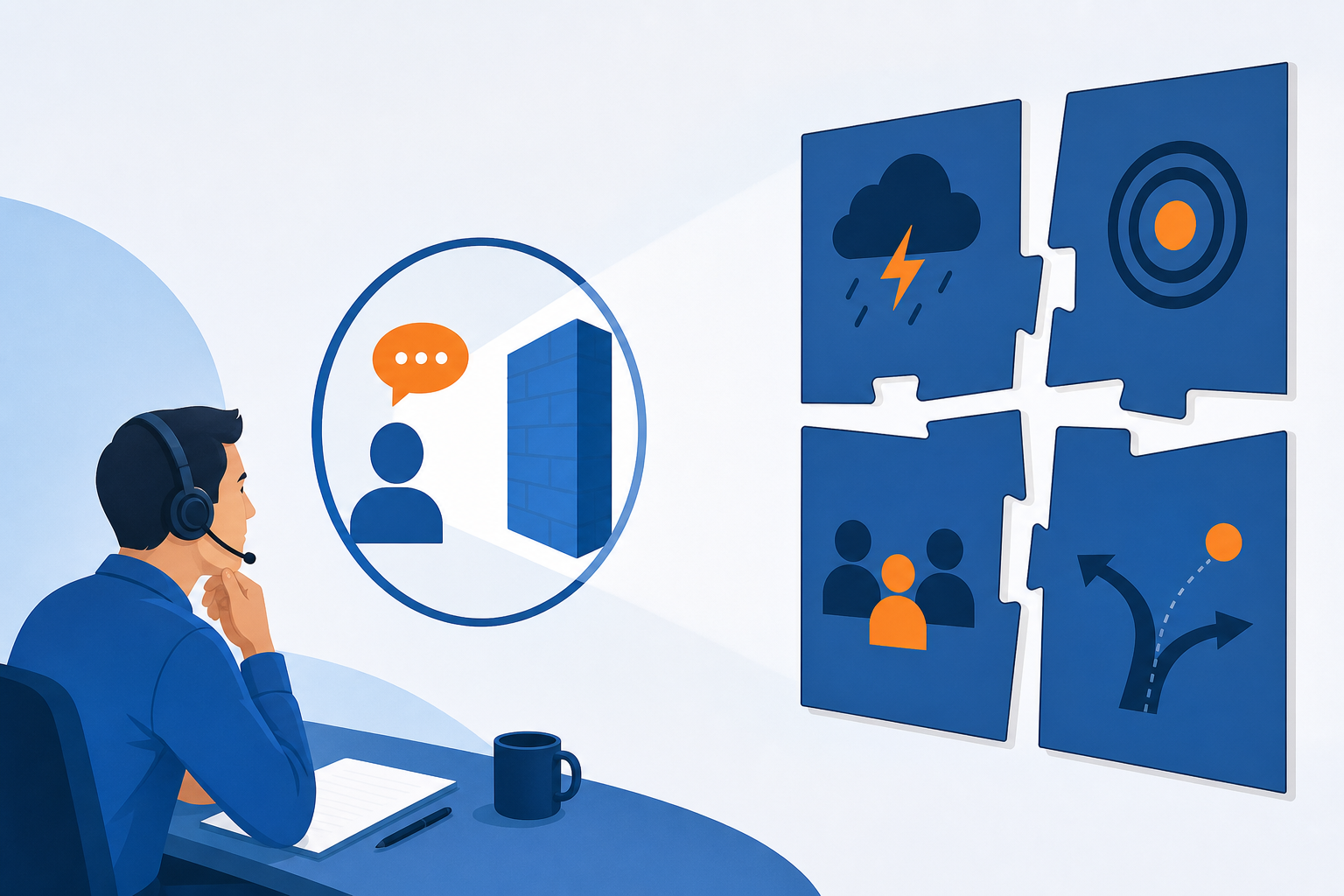
A founder often walks into discovery trying to accomplish everything at once. You need to build trust, understand the current process, find pain, qualify the company, and earn another conversation. Thirty minutes goes fast. When the buyer sounds interested, you fill the remaining gaps with optimism.
A strong founder can close deals on intuition for a while. That's a fair reason to keep the process informal early on. Where it breaks: intuition starts replacing evidence, and every opportunity gets handled differently. You can't improve what you never captured.
Weak notes erase buyer context
Tuesday at 3:15 p.m., a founder hears that reporting takes too long. The note typed into the CRM reads, "Needs better reporting." During Thursday's demo, the founder shows reporting features but never asks who builds the reports, how much time the work consumes, or what happens when leaders get the numbers late.
The buyer gets a competent product tour. Still, the deal loses its thread because the feature isn't tied to a meaningful outcome. The follow-up repeats capabilities rather than helping the buyer explain the purchase internally. You're left wondering why an interested prospect went quiet.
Discovery works more like source code than a form. Each call should add context, test an assumption, and record what changed. If the latest version lives only in your head, the deal branches into conflicting stories no one on the buying side can merge.
More pipeline can hide weak execution
More opportunities make a weak discovery process harder to see. A busy pipeline creates motion, yet the same gaps keep repeating: vague pain, thin business impact, no driving event, and an unknown approval path. You compensate with more demos and more follow-up.
That response feels rational. More pipeline does create more chances to close, and demand generation still matters. Adding opportunities won't fix how you handle the ones you already earned. Before asking how to create more demand, find where buyer understanding disappears from the current motion. That's the leak to plug first.
How to Run Discovery Across the Buying Journey
Run discovery as a sequence of evidence-gathering conversations, not a questionnaire completed before the demo. Each call should confirm what you know, expose what's still unclear, and move the buyer toward a specific decision. The process gets stronger when your notes shape the next conversation instead of sitting untouched in the CRM.
Find where discovery currently stops
Where does your process switch from learning to presenting? For many founders, that point arrives the moment the buyer agrees to a demo. Questions stop. Screen sharing starts, and every later conversation becomes a reaction to whatever the buyer asks.
Pull three recent opportunities at different stages. Read the notes without leaning on memory, then ask whether another person could explain why each buyer might change. If the answer depends on context that isn't written down, you haven't built a repeatable process yet.
Use these questions to diagnose the gap:
- Can you state the buyer's objective in one sentence?
- Can you name the business cost of the current problem?
- Do you know what happens if nothing changes?
- Is there a real event driving the timeline?
- Can you explain who decides and how?
If three or more answers are missing, don't send another generic follow-up. Use the next conversation to close the evidence gaps instead.
Carry six buyer facts across calls
The FOUNDER Framework gives you six areas to understand: Facts, Objectives and Pain, Uncovering Impact, Negative Consequences, Driving Events, and Reaching a Decision. They aren't six stages. They're buyer context you gather and update throughout the deal.
Facts tell you what environment you're selling into. Objectives and Pain explain the gap the buyer wants to close. Impact and Negative Consequences show why the problem deserves attention. Driving Events and Reaching a Decision reveal timing, people, criteria, and approval.
Track the framework in plain language:
- Facts: What's true about the company and current process?
- Objectives and Pain: What needs to improve, and what blocks it?
- Impact: How does the problem affect the business or buyer?
- Negative Consequences: What gets worse if nothing changes?
- Driving Events: Why would the buyer act within a real timeframe?
- Reaching a Decision: Who participates, what matters, and what happens next?
After two substantive calls, any blank area deserves attention. Don't force every question into the next meeting. Pick the gap most likely to change qualification or the next step, and go after that one.
Make the demo continue discovery
A demo should prove how your product solves the buyer's problem. It shouldn't end discovery. The buyer's reactions, questions, and objections hand you new evidence about priorities and decision criteria.
Structure the demo around three or four short chapters. Keep each chapter on one problem and one relevant capability, with roughly one to three minutes of screen time. Unless the buyer asks to go deeper, keep total screen sharing under ten minutes. Cross that line and the room shifts from a conversation to a webinar you're delivering to an audience.
A useful chapter follows four moves:
- Name the problem: Repeat the buyer's situation in their language.
- Explain your approach: Clarify how you solve that specific problem.
- Show the capability: Demonstrate only what supports the claim.
- Ask a question: Learn how the buyer sees the fit.
This is exactly where weekly coaching and call review can help. Instead of guessing whether a demo worked, you can review recent calls, see where momentum was gained or lost, and reinforce one or two behaviors that make discovery continue instead of shutting down.
Write follow-up for the buying team
A useful follow-up should help your contact move the decision internally. Meeting minutes won't do that. Your recap needs to connect the buyer's situation, the cost of the problem, the relevant capability, and the agreed next actions.
Send the recap within two hours, while the details are still fresh. Write it so your contact could forward it to a manager without adding a single line of context. If the email only thanks them and attaches pricing, you've just handed them more work.
Include four blocks:
- Current situation: The facts, objective, and pain you confirmed.
- Business impact: The cost, risk, or missed outcome tied to the problem.
- Relevant capability: How your approach addresses that specific gap.
- Next decision: Each action, owner, and date.
Scripts can reduce blank-page friction. Fair enough. Where they fail: you paste them over weak discovery and the recap says nothing. Treat the format as a container for buyer evidence, not a substitute for listening. If you need help tightening follow-up, demo structure, or positioning, light enablement support can give you the smallest useful artifact to test and improve in live deals.
Review deals for missing evidence
Pipeline review should answer how the deal moves, not just where it sits. Stage labels tell you what your CRM says. Buyer actions tell you what's actually happening.
For every qualified opportunity, inspect the evidence behind four things: pain, impact, urgency, and decision process. Then compare your latest seller action with the buyer's latest action. A sent proposal is seller activity. A scheduled legal review is buyer movement. Only one of those tells you whether the deal is actually advancing.
Use conditional rules to keep the review honest:
- If no buyer action has a date, the next step isn't confirmed.
- If no driving event exists, don't invent urgency.
- If the decision process is unknown, treat the close date as a guess.
- If pain hasn't been tied to impact, revisit discovery before discounting.
- If a deal stalls twice at the same point, inspect the process before blaming the buyer.
Frankly, founders resist this because it can make the pipeline look worse. The number shrinks when weak deals get exposed. That downside is real. Still, a smaller pipeline with clear evidence gives you better coaching decisions than a fat pipeline built on hopeful stage labels.
A weekly pipeline and deal review creates the cadence for this. Instead of turning pipeline meetings into status updates, use a consistent structure to review risk, evidence, next decisions, and rep actions.
Document the smallest process you can teach
A Minimum Viable Sales Process is the smallest teachable motion you can test and improve. It doesn't need enterprise bureaucracy. It needs clear call goals, buyer evidence, exit criteria, and next steps another person can understand.
A common B2B SaaS flow runs four conversations:
- Intro and discovery
- Demo
- Implementation and proposal review
- Final pricing or negotiation
Trials, security reviews, and extra stakeholders may change the sequence. That's normal. Keep the first version small, then revise it using real calls and conversion data rather than adding a rule for every possible exception.
If you want to pressure-test whether your stages and exit criteria reflect how deals actually move, start with a sales process and stage audit. Review the documented process, compare it with representative opportunities, and tighten the parts that break once real buyers enter the picture.
Self-directed learning can teach you how to build that first version, though it won't inspect the calls happening in your pipeline right now. If you want the framework before adding live coaching, start with the Founder-Led Revenue Path on Caliber, including Daniel Hebert's Foundations of Founder-Led Sales. Caliber is the external learning platform, and Daniel is the instructor for that course.
How SalesMVP Lab Applies the Framework to Live Deals
SalesMVP Lab applies practical sales frameworks to the calls, deals, demos, and follow-ups already in front of you. The work focuses on evidence from live opportunities, not abstract lessons. You still own execution, while an experienced sales leader gives you a consistent review layer for deciding what to change next.
Call review turns theory into correction
Knowing the FOUNDER Framework isn't the same as running it under pressure. On a live call, you might accept a surface problem, rush into the product, or leave without mapping who approves the purchase. You usually notice after the opportunity stalls.
In SalesMVP Lab coaching, two coaching sessions per month focus on current deals, process questions, and skill development. Two call reviews per month isolate where a conversation gained or lost momentum, then define one behavior to practice. Asynchronous email support gives you a place to bring concise deal questions between sessions.
The limit matters. Coaching isn't outsourced closing, and nobody can guarantee a win rate or revenue outcome from call review. You stay accountable for running the next conversation. The value comes from seeing the specific behavior you missed, correcting it, and testing the change on a real buyer.
A cadence turns insight into behavior
A single call review can reveal a mistake. Repeated review shows whether that mistake is baked into your sales process. That distinction matters before you rewrite every script, reshuffle pipeline stages, or ask your first sales rep to solve the problem for you.
For founders who need a tighter cadence, SalesMVP Lab can combine weekly coaching and call review with a monthly sales-metric audit. Call evidence shows what happened inside conversations. Conversion, pipeline, cycle, and activity indicators show where to look next, though the quality of that diagnosis still depends on the underlying data.
Light enablement support can then improve one practical asset, such as a demo structure or follow-up format. Build the smallest useful version. Test it on live deals. Keep it only if it improves the behavior you meant to change.
That's how frameworks become management habits. You learn the method, apply it to current opportunities, and document what your first sales rep or early team needs to repeat. If your deals need that live application layer, work directly with SalesMVP Lab on the calls in your pipeline.
Build a Discovery Process Your Team Can Repeat
Better discovery doesn't come from asking every question on the first call. It comes from carrying buyer context through the full decision, then using each conversation to test what you know. Your demo, follow-up, pipeline review, and process should all build from the same evidence.
Start with one live deal. Find the missing context. Ask the next useful question, record the answer, and adjust how you move the opportunity. Close the deals you already earned, then build a team that can repeat how you did it.

About Daniel Hebert
Daniel Hebert is a sales coach, operator, and teacher with 13 years in SaaS. He helps early-stage founders close more of the pipeline they already have, hire and manage their first reps, and build practical sales frameworks their teams can actually use.
Connect with Daniel Hebert on LinkedInFrequently asked questions
How do I ensure my follow-up emails are effective?
To make your follow-up emails impactful, structure them using the FOUNDER Framework. Start by summarizing the key facts and objectives discussed during the call. Next, highlight the business impact and negative consequences of not addressing the buyer's pain. Finally, clearly outline the next steps, including who is responsible for each action and their deadlines. Sending this recap within two hours of the meeting helps keep the details fresh and ensures your contact can easily share it with their team. This approach can help maintain momentum and align all stakeholders.
What if I miss key buyer context during a call?
If you realize you've missed important buyer context during a call, don’t hesitate to address it in your follow-up. Use your follow-up email to recap the conversation and ask any additional questions that could clarify the buyer's situation. You can also schedule a brief follow-up call specifically to gather this missing information. Additionally, consider using SalesMVP Lab's coaching sessions to refine your discovery process and ensure you're capturing all necessary context in future conversations.
Can I improve my demo structure for better engagement?
Absolutely! To enhance your demo structure, focus on the 'Problem → Solution → Show → Ask' formula. Start by clearly stating the buyer's problem using their language, then explain how your product addresses that issue. Show the relevant features in a concise manner, keeping each demo chapter under 3 minutes. Finally, ask a question that encourages dialogue, helping you gauge the buyer's interest and understanding. Regularly reviewing your demos with SalesMVP Lab can also provide insights into where you can improve engagement.
When should I review stalled deals?
You should review stalled deals regularly, ideally on a weekly basis. During these reviews, assess the evidence behind the deal's progress, focusing on pain, impact, urgency, and the decision process. This helps identify gaps in your understanding of the buyer's context. Use the insights gained to adjust your strategy, whether that means revisiting discovery questions or changing your follow-up approach. SalesMVP Lab offers weekly pipeline and deal reviews that can help you stay on top of these stalled opportunities and improve your overall sales process.
Why does documenting buyer context matter?
Documenting buyer context is crucial because it allows you to track the evolution of each deal over time. By capturing facts, objectives, pain points, and buyer reactions, you create a comprehensive record that informs future interactions. This documentation helps you avoid repeating mistakes and ensures that all team members are aligned on the deal's status. Additionally, using SalesMVP Lab's frameworks can help you structure this documentation effectively, making it easier to refer back to during follow-ups and demos.