

Corporate Sales Training and Enablement
When Self-Directed Sales Training Is Enough—and When Coaching Helps
August 28, 2026 · 13 min read
TL;DR
Self-directed sales training can stall deals if features aren't linked to buyer problems and impacts. Focus on connecting features to buyer needs, making next steps actionable, and maintaining ongoing discovery to drive commitment.
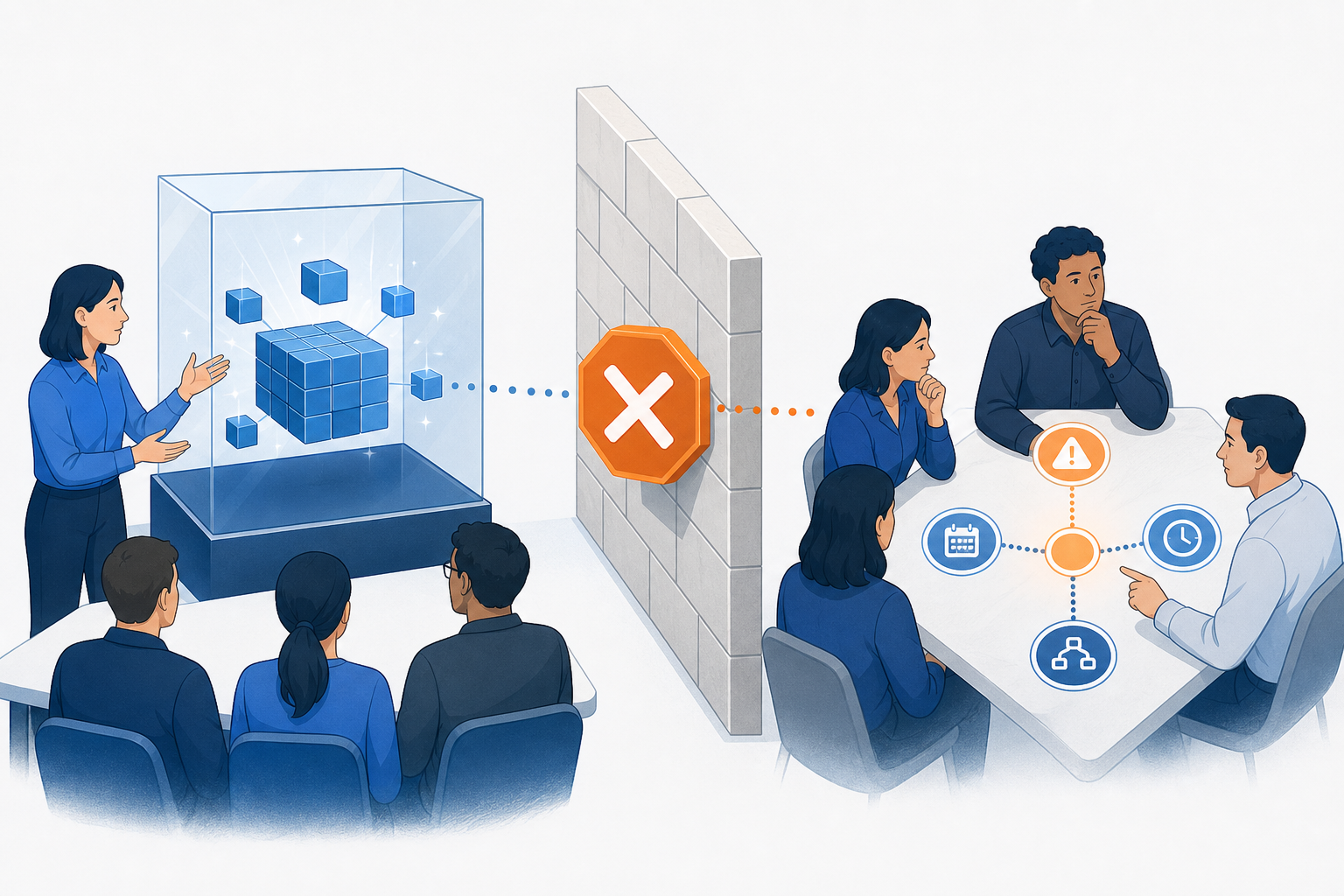
You see a feature as proof your product is different. Your buyer sees one more capability until it changes an outcome they care about. That gap shows up when a strong call ends with interest, yet the buyer won’t commit to a next step. Features earn meaning through buyer context.
Features don’t create differentiation on their own. They matter when you connect them to a buyer problem, business impact, driving event, and decision process. Without that context, your demo may impress the buyer without giving them a reason to act.
Learn more about Need help applying the framework to live deals or your team? Work directly with SalesMVP Lab..
Key Takeaways:
- Diagnose stalled deals before chasing more pipeline.
- Treat discovery as an ongoing process.
- Connect every feature to buyer impact.
- Make next steps include buyer action.
- Document the process before hiring your first sales rep.
Why Qualified Deals Stall When Features Lead
Qualified deals stall when features arrive before the buyer has connected a problem to measurable impact, inaction, timing, and a decision path. A polished demo can earn praise without earning change. If your notes only show what the prospect liked, you’re carrying interest, not a buying case.
Feature Praise Is a Weak Buying Signal
A buyer can love your product and still do nothing. Founders often hear “That’s really useful” and treat it like progress. Yet the buyer hasn’t said what the current problem costs, who feels it, or why it needs attention now. Praise feels good. Evidence moves deals.
The mistake usually appears in the demo. You show something unique, explain how it works, and wait for the buyer to connect the dots. Sometimes they will. More often, they return to a full inbox, competing priorities, and an internal team that never saw the demo.
A feature only matters inside a specific buyer story. Who cares about it? What changes for them? What negative consequence does it reduce? Until you can answer those questions, differentiation remains a product claim.
Founder Intuition Doesn’t Transfer Automatically
A technical founder may run a strong call without knowing why it worked. You recognize a useful detail, adjust the demo, and ask a sharp follow-up question. It feels natural because you understand the product, market, and customer history. Your first sales rep won’t inherit that history through osmosis.
Founder intuition has real value. In an early company, speed and flexibility often beat a detailed sales manual. The limit appears when another person needs to repeat your judgment without sitting inside your head.
Hiring into that gap is like handing an engineer the keys to production with no repository, no tests, and no deployment notes. They watch the system run. They can’t safely rebuild how it works, and every change becomes a guess. A Minimum Viable Sales Process is the missing repository for your sales motion — the written record of how the deals actually got won.
More Follow-Up Can’t Replace Missing Context
Stalled deals often look like follow-up problems. You send another email, share a case study, or offer to answer questions. Nothing moves because the buyer still lacks an internal case for change. More reminders won’t create that case.
Picture Tuesday’s pipeline review at 9 a.m. You open the CRM and three deals sit in “stage 3.” One has no confirmed business impact. One has no driving event. The third depends on a VP of Finance nobody on your team has ever spoken to. The forecast says $42K in commit. The evidence says you’re guessing on all three.
At roughly $30,000 MRR, a developer tools company faced exactly this — inconsistent qualification, patchy follow-through, and call sequencing that changed every week. After building a simpler, repeatable sales process, it grew past $70,000 MRR over eight months. That’s one company’s outcome, not a guarantee. The narrower lesson holds: process discipline gave the team something concrete to test and improve, instead of a hunch to defend.
The next question is simple. What evidence should every qualified deal carry?
What to Capture When Buyers Consider a Change
Every qualified deal should capture six types of buyer context: facts, objectives and pain, business impact, negative consequences, driving events, and the decision path. Those elements form the FOUNDER Framework. Use them across the buying journey, not as a scripted interrogation during one discovery call.
Audit Deal Evidence Before Changing Your Pitch
Ten recent opportunities usually provide enough material for a useful first audit. Choose a mix of wins, qualified losses, and deals that have stalled. Read the notes, follow-up emails, and next steps. Don’t start by judging the founder or rep.
Look for missing buyer evidence instead. If most opportunities lack the same information, you don’t have an individual performance problem. You have a process gap. Fixing the pitch first would hide the missing diagnosis under better wording.
Ask six questions for every opportunity:
- Facts: What do we know about the buyer’s current environment?
- Objectives and pain: What are they trying to change, and what blocks them?
- Impact: How does the problem affect revenue, cost, risk, or team capacity?
- Negative consequences: What happens if they leave it alone?
- Driving events: Why does action matter within a specific window?
- Decision: Who participates, what criteria matter, and how will approval happen?
Here’s the decision rule that makes the audit useful: if your notes can’t answer at least four of those six questions, the deal is not fully qualified — move it back and return to discovery. The gaps aren’t a scoring exercise. They tell you the exact question to ask on the next call.
Connect Each Feature to Someone Who Cares
Demos that explain the product without a buyer story leave money on the table. A B2B customer-feedback company learned this in a crowded market: its demos walked through the product cleanly, but the buyer never heard how the problem touched revenue. The team started tying customer pain to revenue context, then carried that context through demos and follow-up. MRR increased 37% over four months during the engagement.
That result doesn’t mean a framework alone creates growth. Product fit, pipeline quality, pricing, and execution still matter. The stronger point is that features became relevant only when buyers could connect them to a problem they already cared about.
Run every differentiator through four questions:
- Who cares? Name the role that feels the problem.
- What changes? Describe the work or outcome that becomes different.
- Why does it matter? Connect the change to business or personal impact.
- What proves it? Decide what the buyer needs to see, test, or confirm.
Here’s a fast test for weak positioning: swap in a competitor’s feature. If your outcome language still reads the same, your positioning is too broad and every rival can claim it too. Tighten the buyer, the problem, or the mechanism until the swap breaks the sentence. Specificity is what creates differentiation.
Keep Discovery Running Across the Buying Journey
Where does discovery end? It shouldn’t end after the first call. New stakeholders introduce different objectives, concerns, and decision criteria. Pricing can expose financial approval steps that never appeared during the demo.
Treat discovery as a process, not an event. Your first call builds an initial view of the deal. Every later conversation should confirm, revise, or expand that view. Good notes remain open to new evidence.
A practical B2B SaaS flow often uses four conversations:
- Intro and discovery: Confirm fit, pain, desired change, and initial impact.
- Demo: Show how relevant capabilities address the diagnosed problem.
- Implementation and proposal review: Resolve delivery concerns and confirm stakeholders.
- Pricing and negotiation: Align commercial terms with the real decision process.
Some deals need fewer calls, enterprise opportunities may need more, and the rule isn’t four meetings. The rule is that each meeting has one clear job and ends with shared evidence about what happens next.
Build Demos Around Buyer Problems
A feature tour explains the product. A strong demo proves how the product addresses the buyer’s situation. Start each section by naming the problem you heard, then explain your approach, show the relevant feature, and ask a question.
Keep the demo focused. Three or four chapters are usually enough, with one to three minutes of screen time per chapter. Total screen sharing should stay under ten minutes unless the buyer asks for technical depth. More product rarely fixes weak discovery.
Suppose a buyer says their team can’t connect customer requests to revenue. Don’t open with navigation and settings. Name the prioritization problem, explain the value of revenue context, show the relevant workflow, then ask how that would change their next planning meeting.
The question matters. It turns the buyer from a viewer into a participant. Their answer also creates fresh discovery, which tells you where to go next.
Make Next Steps Require Buyer Action
A next step without buyer action is usually a seller task. “Send pricing” tells you what you’ll do. It says nothing about whether the buyer will review it, invite finance, compare options, or make a decision.
Reserve the final five to ten minutes of every call for next steps. Confirm what each side will do, who owns it, and when it should happen. If the buyer won’t commit to any action, treat that as deal evidence rather than optimism with a calendar invite.
Your follow-up should reinforce the same structure. Send it within two hours when possible, while the language is fresh. Make the recap easy for your contact to forward internally.
A useful recap includes:
- The buyer’s current facts and objective
- The problem and stated business impact
- The cost or risk of leaving it unresolved
- The relevant capabilities discussed
- The driving event and decision factors
- Named actions with dates for both sides
When the buyer corrects your recap, that’s a win, not a stumble. You just found out where your understanding was wrong before the proposal or pricing call — cheap to fix now, expensive to fix later.
Document the Smallest Process a Rep Can Repeat
A Minimum Viable Sales Process is the smallest teachable process you can run, test, and improve. It doesn’t need a huge playbook. It needs clear call goals, evidence standards, demo structure, follow-up expectations, and stage exit criteria.
Start with the motion you already use. Record what should happen before, during, and after each buyer conversation. Then compare the document with actual calls. If the written process says one thing while successful calls show another, update the process.
Founders with only a few early conversations may not need formal stages yet. That’s fair — forcing stage rules onto a dozen exploratory calls just creates paperwork nobody reads. The math flips once you have active qualified pipeline or plan to hire your first sales rep: the cost of undocumented judgment climbs fast, because every deal now depends on a memory only you have.
If you need the underlying structure before writing your process, use the Founder-Led Revenue Path on Caliber, including Daniel Hebert’s Foundations of Founder-Led Sales. Caliber is the external learning platform, and Daniel contributes the founder-led sales course. The learning gives you a base. Your live calls show where that base needs adjustment.
A process becomes teachable when another person can use it and explain why. Ask your first rep to run the structure on two real calls, then review the evidence together. If they can follow the steps but can’t explain what changed in the buyer’s thinking, the document captures activity, not judgment.
The process can live on paper. The harder part is reviewing it often enough to change behavior.
How SalesMVP Lab Reinforces the Process
Ready to get started? Start with the Founder-Led Revenue Path on Caliber, including Daniel Hebert’s Foundations of Founder-Led Sales..
SalesMVP Lab reinforces the process through audits, call review, coaching, and management cadence tied to live opportunities. The work doesn’t replace founder execution or guarantee revenue. It gives you an experienced review layer for spotting missing deal evidence and deciding what to change next.
Call Review Turns Framework Into Behavior
A sales process and stage audit checks whether your CRM stages reflect how buyers actually move. It looks at exit criteria, buyer actions, representative opportunities, and team expectations. A stage named “proposal” means little if nobody can explain what the buyer agreed to do.
Weekly coaching and call review then bring the framework into current conversations. SalesMVP Lab reviews where a call gained or lost momentum, which part of the buyer context is missing, and what behavior to practice next. One week might focus on impact. The next might focus on reaching a decision.
Call review has limits. Feedback depends on usable recordings, accurate context, and a founder willing to change the next conversation. Coaching can sharpen judgment, but it can’t make calls for you.
The upside is focus. Instead of rewriting your entire pitch, you isolate one behavior and test it against the next live opportunity. Small call-level changes earn a place in the process only after they work more than once.
Pipeline Review Makes Judgment Teachable
A weekly pipeline and deal review turns the forecast meeting into a decision meeting. Each opportunity is reviewed for risk, evidence, the next buyer decision, and the action required from the founder or rep. Status matters less than what the deal needs.
SalesMVP Lab can also bring hands-on sales management when a small team doesn’t yet need a full-time leader. That includes setting expectations, coaching deals, and improving the operating cadence. Company leadership still owns hiring, execution, and the number.
When call review exposes a live deal with missing urgency or an unclear decision path, work directly with SalesMVP Lab to apply the framework to that deal or your team. Bring the opportunity, notes, and current risk. The goal is to decide what you need to learn or change next.
Once the cadence exposes repeatable judgment, you can hand your first sales rep more than a script.
What Your First Sales Rep Should Inherit
Your first sales rep should inherit a tested sales process, clear deal evidence, call examples, and a regular coaching cadence. They shouldn’t be asked to discover qualification, demo structure, follow-up, and stage rules through trial and error. Their job is to learn the motion, run it, and improve it with you.
Document less. Observe more. Start with the qualified pipeline already in motion, review what buyers actually said, and capture the smallest process another person can repeat. Learn the framework. Apply it to live deals. Build a team that can repeat it.

About Daniel Hebert
Daniel Hebert is a sales coach, operator, and teacher with 13 years in SaaS. He helps early-stage founders close more of the pipeline they already have, hire and manage their first reps, and build practical sales frameworks their teams can actually use.
Connect with Daniel Hebert on LinkedInFrequently asked questions
How do I conduct a sales process audit?
To conduct a sales process audit, start by reviewing a mix of ten recent opportunities, including wins and stalled deals. Look for missing buyer evidence in your notes, focusing on key areas like buyer objectives, pain points, and decision-making processes. This will help you identify process gaps. After the audit, you can use insights from SalesMVP Lab's sales process and stage audit to ensure your stages and exit criteria reflect how deals actually progress.
What if my deals keep stalling?
If your deals are stalling, first ensure you have a clear understanding of the buyer's context, including their objectives and pain points. Use the FOUNDER Framework to uncover the impact of their issues and the consequences of inaction. You can also engage with SalesMVP Lab for coaching sessions to refine your approach and develop a Minimum Viable Sales Process that helps keep the momentum going in your sales conversations.
Can I improve my demo structure?
Absolutely! To improve your demo structure, focus on connecting each feature to a specific buyer problem. Start by naming the problem, explain how your solution addresses it, show the relevant feature, and then ask a question to engage the buyer. Keeping your demo concise, ideally within three to four chapters, can also help maintain focus. SalesMVP Lab offers resources that can guide you in structuring impactful demos that resonate with your audience.
When should I follow up after a sales call?
You should follow up within two hours after a sales call while the conversation is still fresh. In your follow-up, recap the key points discussed, including the buyer's objectives, the impact of their pain points, and the next steps agreed upon. This not only reinforces your professionalism but also keeps the momentum of the conversation going. SalesMVP Lab provides templates and guidance to help you craft effective follow-up emails.
Why does my sales team struggle with qualification?
Your sales team may struggle with qualification due to a lack of structured processes. Implementing the FOUNDER Framework can help clarify the key elements needed for qualification, such as understanding the buyer's facts, objectives, and pain. Additionally, consider engaging with SalesMVP Lab for coaching sessions to improve your team's skills in identifying qualified leads and refining their approach to discovery.