

Demos and Sales Meetings
Why Qualified B2B SaaS Deals Stall After a Strong Demo
August 24, 2026 · 11 min read
TL;DR
B2B SaaS deals often stall after strong demos due to a lack of urgency and follow-up. To improve outcomes, focus on applying new sales techniques in real calls, diagnosing behaviors, and reinforcing skills through review, rather than relying solely on one-off training.
You left a demo this week feeling good, then realized the buyer never named a deadline. You showed the right features. They asked smart questions. Yet you still can’t explain why the deal should move now.
Another training session won’t fix that gap by itself. You don’t need more sales knowledge sitting in a notebook. You need to apply one useful idea to a real call, inspect what happened, and decide what changes before the next conversation.
Learn more about Need help applying the framework to live deals or your team? Work directly with SalesMVP Lab..
Key Takeaways:
- Treat discovery as a process across the full deal.
- Diagnose call behavior before assigning training.
- Practice one observable behavior at a time.
- Use live deals to expose where execution breaks.
- Reinforce skills through call and pipeline review.
- Document what works before hiring your first sales rep.
Why One-Off Sales Training Rarely Changes Calls
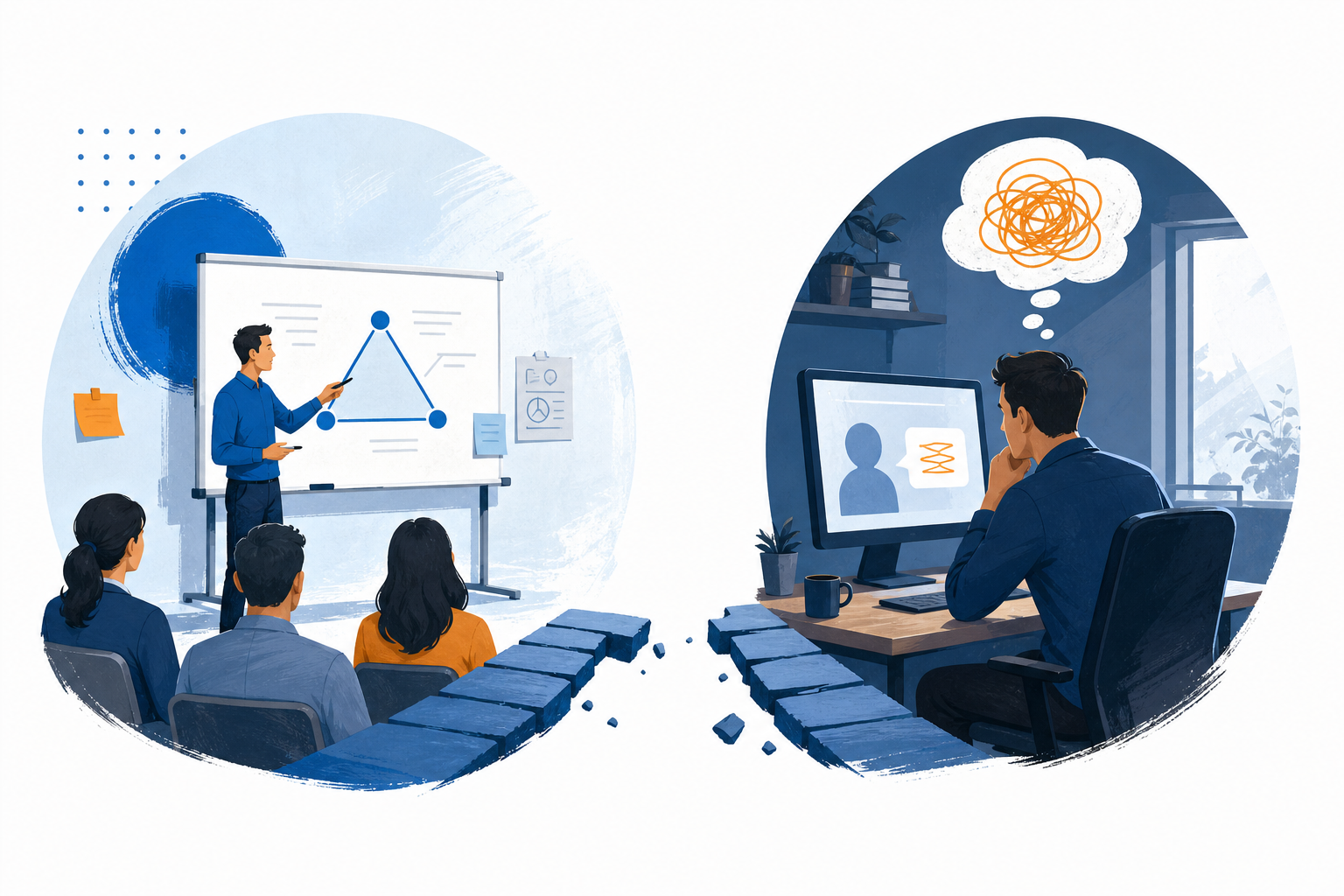
One-off sales training rarely changes performance because learning and execution happen in different places. A founder may understand a framework during a workshop, then abandon it when a buyer challenges pricing two days later. Without live application and review, the old behavior wins.
Knowledge Isn’t the Same as Behavior
A workshop can create shared language. That has value. If your team can’t agree on what strong discovery means, a common framework gives everyone a useful starting point.
The limitation appears on the next call. Knowing that you should uncover business impact doesn’t mean you’ll ask the follow-up when a buyer gives you a vague answer. Pressure shortens your thinking, and familiar habits take over. That’s why sales skill has to be observed in action.
A practical test is simple. Ask a founder to explain a discovery concept, then review whether it appeared in the latest call. If the explanation is strong but the behavior is missing, the problem isn’t knowledge. It’s application.
Real Calls Expose What Training Misses
At 3:00 p.m., a founder joins a demo with a qualified prospect. The buyer mentions that their current process wastes time, so the founder opens the product and starts showing automation features. Twenty minutes later, nobody has defined how much time is lost, who feels the impact, or why the problem needs attention now.
The founder didn’t forget the entire framework. They missed one call-level decision: stay with the problem before showing the product. That small miss changes the rest of the deal because the demo now proves functionality without proving value.
Call review reveals why the conversation moved too early. It also gives you something precise to practice: ask two impact questions before screen sharing. Specific behavior can be repeated. “Improve discovery” can’t.
Managers Turn Lessons Into Standards
Founders often lack someone who can watch a call and say, “You accepted that answer too quickly.” A course can explain what good looks like, but it can’t inspect every live decision. Without that review layer, you’re left grading yourself.
The same issue gets worse after the first sales hire. Your rep copies the calls, notes, and habits they see. If the motion is inconsistent, adding a person gives inconsistency more capacity. You either amplify good or amplify suck.
One-off training still has a place. It can introduce a concept or reset language across a team. Expecting it to change performance without call review and manager reinforcement asks the event to do work it wasn’t designed to do.
A better answer connects learning, evidence, and the next call.
How to Build Repeatable Sales Behavior
Repeatable sales behavior comes from a short cycle: diagnose the gap, define the behavior, apply it to a live deal, and review the evidence. Keep the cycle narrow. You’re trying to change what happens in buyer conversations, not finish a larger training library.
Diagnose the Gap Before Assigning Training
What exactly is breaking? “We need better discovery” could mean weak qualification, shallow impact questions, missing urgency, or no decision process. Each problem requires different practice.
Start with two or three representative calls and one pipeline view. Listen for what the seller asked, what the buyer actually confirmed, and where momentum changed. Then compare those call patterns with stalled stages, win rate, and sales cycle. The connection matters because a metric shows where to inspect, while a call shows what happened.
Use these questions before prescribing training:
- Can you state the buyer’s main problem in their words?
- Did the buyer describe a measurable business impact?
- Is there a real driving event?
- Do you know who joins the decision?
- Does the next step include buyer action and a date?
If three calls miss the same element, you’ve probably found a behavior worth coaching. If only one call misses it, review the deal before changing the whole process.
Define One Behavior You Can Hear
Broad goals create broad feedback. “Be more consultative” sounds useful, but nobody can hear it on a recording. A behavior needs a clear moment and a clear action.
Suppose buyers describe a surface problem, and the founder moves straight into the demo. The practice target might be: ask one impact question and one consequence question before presenting a feature. Now the founder knows when to act, and the reviewer knows what to inspect.
Write the behavior in plain language:
- Trigger: The buyer names a problem or goal.
- Action: Ask how it affects the business.
- Follow-up: Ask what happens if nothing changes.
- Evidence: Capture the buyer’s answer in the recap.
One behavior can feel too narrow. Fair concern. Yet narrow practice makes the change visible, while five simultaneous goals usually disappear once the call becomes difficult.
Apply the Framework Across the Deal
Discovery is a process, not an event. The first call gives you an early view of the buyer’s facts, objectives, and problems. Later conversations should deepen impact, consequences, timing, and the decision path.
Treat the FOUNDER Framework as a set of connected buyer questions, not a script you complete in order. Facts may appear during qualification. Business impact may become clear during the demo. A new stakeholder may expose different decision criteria during proposal review.
Before each conversation, identify the biggest missing part:
- Review what the buyer has already confirmed.
- Mark assumptions that still lack evidence.
- Choose one or two gaps for the next call.
- Plan how the meeting should advance the decision.
- Update the recap and next step afterward.
A complete checklist after the first call can create false confidence. Complex B2B decisions change as more people join, which is why discovery must continue until the decision is made.
Review Evidence Instead of Memory
Founders usually remember the broad shape of a call. They rarely remember the exact answer that caused them to switch topics, defend pricing, or start showing features. Recordings and detailed notes make those moments available for inspection.
Call evidence isn’t perfect. A bad recording or missing context can produce the wrong lesson. Review the opportunity, the participants, and the call objective before judging a five-minute clip.
Then locate four moments:
- Where the buyer gave a vague answer
- Where the seller made an assumption
- Where momentum increased or dropped
- Where both sides agreed to a next step
A useful review ends with one behavior to keep and one to change. More feedback feels thorough, but it gives the founder too many things to remember under pressure.
Reinforce Skills Inside Pipeline Review
Pipeline review shouldn’t be a tour of CRM fields. It should answer why a deal is moving, what evidence supports that belief, and which decision must happen next. Otherwise, the meeting produces updates without improving judgment.
Take a deal sitting in demo completed. “They liked it” isn’t evidence. A stronger review checks whether the buyer confirmed impact, involved the right stakeholders, named a driving event, and accepted a dated action.
Use the same sequence for each important deal:
- What problem has the buyer confirmed?
- What business impact is attached to it?
- Why would they act now?
- How will they reach a decision?
- What buyer action happens next?
Some pipeline meetings need fast status updates. That’s valid when you’re checking simple execution. For complex or stalled opportunities, status alone hides why the deal is weak. Coaching belongs where deal decisions are already being made.
Capture a Process Someone Else Can Learn
A Minimum Viable Sales Process is the smallest teachable process you can test and improve. It doesn’t need a giant playbook. It needs a clear call sequence, stage expectations, useful notes, and buyer actions that prove progress.
Start with the motion you already run. Document what each call is meant to accomplish, what evidence moves a deal forward, and what follow-up keeps both sides aligned. Then test the process against live opportunities and change what fails.
A developer-tools company used that approach after inconsistent qualification and follow-up contributed to a plateau near $30,000 MRR. With a simpler sales-call sequence and stronger follow-through, it grew beyond $70,000 MRR over eight months. That’s one company’s outcome, not a promise. The transferable lesson is that documented behavior gave the founder something to repeat and improve.
If you want to learn the framework before adding live coaching, use the Founder-Led Revenue Path on Caliber, including Daniel Hebert’s Foundations of Founder-Led Sales, then test one idea against an active deal. Caliber provides the self-directed learning layer. Your calls provide the evidence.
How SalesMVP Lab Applies Training to Live Deals
Ready to get started? Start with the Founder-Led Revenue Path on Caliber, including Daniel Hebert’s Foundations of Founder-Led Sales..
SalesMVP Lab connects practical frameworks to current calls, deals, pipeline, and management decisions. Coaching focuses on what happened, why it happened, and what you should change next. The founder still owns execution. The value comes from experienced review and repeated application.
Coaching Starts With Current Calls
Founder coaching can include two coaching sessions and two call reviews per month. The sessions focus on current opportunities, process questions, and skill development rather than generic role-play detached from your pipeline.
A call review finds the exact point where momentum changed. Maybe you showed the product before defining impact. Maybe the buyer named a deadline, but you never mapped the approval process. The coaching decision then becomes specific: what do you ask, show, or confirm on the next call?
Weekly coaching and call review provide a tighter cadence when the motion needs more support. Recent calls become the evidence. The next conversation becomes the practice ground.
Pipeline Reviews Build Better Judgment
SalesMVP Lab uses weekly pipeline and deal review to turn status meetings into decisions. The conversation covers risk, available evidence, the buyer’s next decision, and the action the founder or rep needs to take.
That cadence matters when several deals look active but lack a clear reason to move. Instead of accepting stage labels, you inspect buyer pain, impact, driving events, and decision steps. Weak assumptions surface before they become forecast problems.
A customer-feedback SaaS company applied the FOUNDER Framework to discovery, follow-up, and demos tied to buyer outcomes. It reported a 37% MRR increase over four months. Again, no coaching engagement can guarantee that outcome. The useful connection is the mechanism: live opportunities gave the framework somewhere concrete to change behavior.
Audits Show What Needs Reinforcement
A representative sales-call audit can separate an isolated mistake from a repeated team pattern. A funnel, conversion, pipeline, and metric audit adds another view by comparing call behavior with stages, cycle, and pipeline health. Data quality still matters. Bad CRM inputs can only support limited conclusions.
For larger teams, a prioritized sales enablement plan can define the target behavior, audience, delivery format, manager reinforcement, and measurement. Weekly team training and call review can then focus on one or two behaviors at a time. No generic workshop pretending every role has the same problem.
When the same discovery or decision gap keeps appearing across calls, you can work directly with SalesMVP Lab on live deals or your team and build the review cadence around that evidence. The work doesn’t replace your accountability. It gives you an experienced sales leader in the decisions that matter.
Why Repeatable Behavior Beats More Sales Content
More material won’t close the qualified deals already in motion. Better behavior might. Diagnose the gap, practice one change, review the call, and reinforce it inside the deal process.
Start small. Pick one stalled opportunity and identify the missing buyer evidence. Then decide what you need to learn on the next call.
Learn the framework, Apply it to live deals, and Build a team that can repeat it.

About Daniel Hebert
Daniel Hebert is a sales coach, operator, and teacher with 13 years in SaaS. He helps early-stage founders close more of the pipeline they already have, hire and manage their first reps, and build practical sales frameworks their teams can actually use.
Connect with Daniel Hebert on LinkedInFrequently asked questions
How do I apply the FOUNDER Framework to my sales calls?
To apply the FOUNDER Framework during your sales calls, start by diagnosing the buyer's needs. Ask questions to uncover the facts about their situation, identify their objectives and pain points, and quantify the impact of these issues. Next, focus on uncovering the negative consequences of inaction and identify any driving events that create urgency. Finally, guide the conversation towards reaching a decision by mapping out their decision-making process. You can use SalesMVP Lab to get coaching on applying this framework effectively in real-time with your current deals.
What if my sales team struggles with follow-ups after demos?
If your sales team is having trouble with follow-ups, consider implementing a structured follow-up email template. Use the FOUNDER Framework to recap the call, highlighting key facts, objectives, impacts, and next steps. This ensures everyone is aligned on what was discussed and what actions are required. Additionally, you can schedule regular pipeline reviews with SalesMVP Lab to reinforce follow-up strategies and improve accountability in your team’s execution.
When should I conduct a sales-call audit?
Conduct a sales-call audit when you notice recurring issues in your sales process, such as stalled deals or inconsistent messaging. This audit can help identify observable capability gaps across roles and stages. By reviewing a cross-section of calls, you can pinpoint where your team may be struggling and what specific behaviors need reinforcement. SalesMVP Lab offers representative sales-call audits that can provide valuable insights into your team's performance.
How do I ensure my team is prepared for pipeline reviews?
To prepare your team for effective pipeline reviews, establish a consistent structure for the meetings. Start by reviewing the key metrics like buyer pain, impact, and decision-making steps. Encourage your team to come prepared with evidence from their recent calls. Use SalesMVP Lab's weekly pipeline and deal review sessions to turn these meetings into decision-making opportunities, ensuring that everyone understands the next steps needed to move deals forward.
Can I use SalesMVP Lab for team training?
Yes, you can use SalesMVP Lab for team training. They offer weekly team training and call reviews that focus on targeted skill development based on your team's current calls and opportunities. This ensures that the training is relevant and immediately applicable. By engaging with SalesMVP Lab, your team can improve their sales skills in a structured way, making the most of the insights gained from real sales interactions.